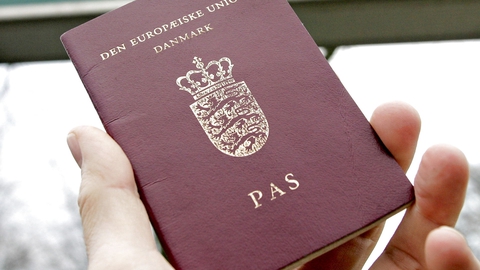
En længere artikkel, der er et must, hvis man rejser til Kina.
Har man følsomme firma oplysninger med på PC, smartphone eller Tab. Så lad det hele blive
hjemme. Rejs kun med "blanke" apparater, og læs nedenstaaende artikkel.
The New York
Times
February 10, 2012
Traveling Light in a Time of Digital
Thievery
By NICOLE PERLROTH
SAN FRANCISCO
When Kenneth G. Lieberthal, a
China expert at the Brookings Institution, travels to that country, he follows a
routine that seems straight from a spy film.
He leaves his cellphone and
laptop at home and instead brings “loaner” devices, which he erases before he
leaves the United States and wipes clean the minute he returns. In China, he
disables Bluetooth and Wi-Fi, never lets his phone out of his sight and, in
meetings, not only turns off his phone but also removes the battery, for fear
his microphone could be turned on remotely. He connects to the Internet only
through an encrypted, password-protected channel, and copies and pastes his
password from a USB thumb drive. He never types in a password directly, because,
he said, “the Chinese are very good at installing key-logging software on your
laptop.”
What might have once sounded like the behavior of a paranoid is
now standard operating procedure for officials at American government agencies,
research groups and companies that do business in China and Russia — like
Google, the State Department and the Internet security giant McAfee. Digital
espionage in these countries, security experts say, is a real and growing threat
— whether in pursuit of confidential government information or corporate trade
secrets.
“If a company has significant intellectual property that the
Chinese and Russians are interested in, and you go over there with mobile
devices, your devices will get penetrated,” said Joel F. Brenner, formerly the
top counterintelligence official in the office of the director of national
intelligence.
Theft of trade secrets was long the work of insiders —
corporate moles or disgruntled employees. But it has become easier to steal
information remotely because of the Internet, the proliferation of smartphones
and the inclination of employees to plug their personal devices into workplace
networks and cart proprietary information around. Hackers’ preferred modus
operandi, security experts say, is to break into employees’ portable devices and
leapfrog into employers’ networks — stealing secrets while leaving nary a
trace.
Targets of hack attacks are reluctant to discuss them and
statistics are scarce. Most breaches go unreported, security experts say,
because corporate victims fear what disclosure might mean for their stock price,
or because those affected never knew they were hacked in the first place. But
the scope of the problem is illustrated by an incident at the United States
Chamber of Commerce in 2010.
The chamber did not learn that it — and its
member organizations — were the victims of a cybertheft that had lasted for
months until the Federal Bureau of Investigation told the group that servers in
China were stealing information from four of its Asia policy experts, who
frequent China. By the time the chamber secured its network, hackers had
pilfered at least six weeks worth of e-mails with its member organizations,
which include most of the nation’s largest corporations. Later still, the
chamber discovered that its office printer and even a thermostat in one of its
corporate apartments were still communicating with an Internet address in
China.
The chamber did not disclose how hackers had infiltrated its
systems, but its first step after the attack was to bar employees from taking
devices with them “to certain countries,” notably China, a spokesman
said.
The implication, said Jacob Olcott, a cybersecurity expert at Good
Harbor Consulting, was that devices brought into China were hacked. “Everybody
knows that if you are doing business in China, in the 21st century, you don’t
bring anything with you. That’s ‘Business 101’ — at least it should
be.”
Neither the Chinese nor Russian embassies in Washington responded to
several requests for comment. But after Google accused Chinese hackers of
breaking into its systems in 2010, Chinese officials gave this statement: “China
is committed to protecting the legitimate rights and interests of foreign
companies in our country.”
Still, United States security experts and
government officials say they are increasingly concerned about breaches from
within these countries into corporate networks — whether through mobile devices
or other means.
Last week, James R. Clapper, the director of national
intelligence, warned in testimony before the Senate Intelligence Committee about
theft of trade secrets by “entities” within China and Russia. And Mike
McConnell, a former director of national intelligence, and now a private
consultant, said in an interview, “In looking at computer systems of consequence
— in government, Congress, at the Department of Defense, aerospace, companies
with valuable trade secrets — we’ve not examined one yet that has not been
infected by an advanced persistent threat.”
Both China and Russia
prohibit travelers from entering the country with encrypted devices unless they
have government permission. When officials from those countries visit the United
States, they take extra precautions to prevent the hacking of their portable
devices, according to security experts.
Now, United States companies,
government agencies and organizations are doing the same by imposing
do-not-carry rules. Representative Mike Rogers, the Michigan Republican who is
chairman of the House Intelligence Committee, said its members could bring only
“clean” devices to China and were forbidden from connecting to the government’s
network while abroad. As for himself, he said he traveled “electronically
naked.”
At the State Department, employees get specific instruction on
how to secure their devices in Russia and China, and are briefed annually on
general principles of security. At the Brookings Institution, Mr. Lieberthal
advises companies that do business in China. He said that there was no formal
policy mandating that employees leave their devices at home, “but they certainly
educate employees who travel to China and Russia to do so.”
McAfee, the
security company, said that if any employee’s device was inspected at the
Chinese border, it could never be plugged into McAfee’s network again. Ever. “We
just wouldn’t take the risk,” said Simon Hunt, a vice president.
At
AirPatrol, a company based in Columbia, Md., that specializes in wireless
security systems, employees take only loaner devices to China and Russia, never
enable Bluetooth and always switch off the microphone and camera. “We operate
under the assumption that we will inevitably be compromised,” said Tom
Kellermann, the company’s chief technology officer and a member of President
Obama’s commission on cybersecurity.
Google said it would not comment on
its internal travel policies, but employees who spoke on condition of anonymity
said the company prohibited them from bringing sensitive data to China, required
they bring only loaner laptops or have their devices inspected upon their
return.
Federal lawmakers are considering bills aimed at thwarting
cybertheft of trade secrets, although it is unclear whether this legislation
would directly address problems that arise from business trips
overseas.
In the meantime, companies are leaking critical information,
often without realizing it.
“The Chinese are very good at covering their
tracks,” said Scott Aken, a former F.B.I. agent who specialized in
counterintelligence and computer intrusion. “In most cases, companies don’t
realize they’ve been burned until years later when a foreign competitor puts out
their very same product — only they’re making it 30 percent
cheaper.”
“We’ve already lost our manufacturing base,” he said. “Now
we’re losing our R.& D. base. If we lose that, what do we fall back on?”